Golden Hour, Timeline Buffers, and the Best Light: How to Plan Wedding Photos That Look Like a Dream (Without Feeling Rushed)
If you’ve ever seen wedding photos that look glowy, soft, cinematic, and effortless, there’s a secret behind them…
It’s not a $5,000 camera.
It’s not “being naturally photogenic.”
It’s not even the venue.
It’s light + time.
When your timeline supports great lighting (and has breathing room), your photos don’t just look better — your entire day feels calmer.
Below is a simple, real-world guide you can use to plan wedding photos that look amazing and keep your day running smoothly.
What Is Golden Hour (and Why Photographers Love It)?
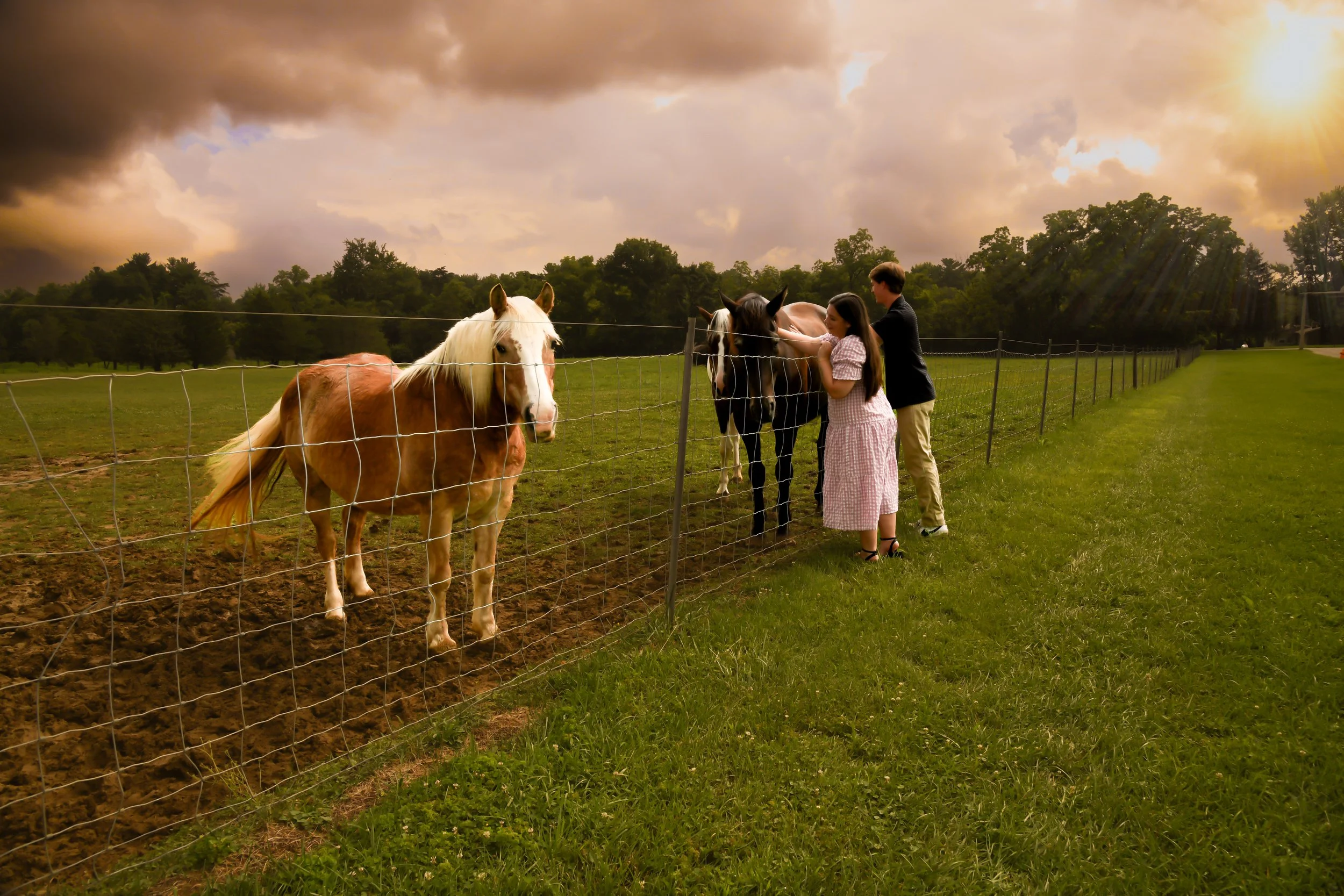
Golden hour is the last hour or so before sunset (and sometimes the first after sunrise), when sunlight turns warm, soft, and flattering.
Why it matters:
Softer shadows (no harsh lines under eyes)
Warm skin tones (hello glow)
Dreamy background light (that “film-like” look)
Less squinting compared to midday sun
In Ohio, golden hour can look different depending on the season — but the concept stays the same:
soft light = stunning portraits.
The Biggest Wedding Photo Timeline Mistake
The #1 thing that creates rushed, stressful photos?
Not enough buffer time.
Most couples underestimate how long “little things” take on a wedding day:
pinning boutonnieres
bustling the dress
finding the bouquet
fixing hair
grabbing grandma
moving between locations
Even at the most organized weddings, something runs 10–15 minutes behind.
That’s why buffers aren’t “extra.”
They’re your safety net.
My rule:
✅ Add 10–15 minutes of buffer between major moments
✅ Add 15–20 minutes if you’re traveling between locations
Your Best Friend: A Photo-First Timeline
Here’s the truth: the timeline that makes photos easiest also makes the day smoother for everyone.
Because when photo time is planned well:
you’re not being pulled away constantly
you’re not panicking before the ceremony
you actually get to enjoy your cocktail hour
your bridal party stays relaxed
So let’s build a timeline that works.
Two Timeline Options That Photograph Beautifully
Option A: First Look (More Photos, Less Rush)
This is great if you want more portrait time and a calmer day.
Why couples love it:
You get emotional, private reactions (without 100 eyes watching)
Most portraits happen before the ceremony
You can join cocktail hour more easily
Sample flow:
Getting ready details + candid moments
First look
Couple portraits
Wedding party photos
Family photos (if everyone is ready early)
Ceremony
Cocktail hour candids + “just married” glow photos
Sunset golden hour portraits (short + sweet)
Reception
Option B: No First Look (Classic + Traditional)
This is perfect if you want the aisle moment to be the first time you see each other.
Important note: This option works best when you protect portrait time.
Sample flow:
Getting ready photos
Ceremony
Family photos immediately after
Wedding party photos
Couple portraits
Reception entrance + dinner
Golden hour portraits during reception (10–15 minutes)
This is where buffers matter most — because post-ceremony time goes fast.
How Much Time Do You Actually Need for Photos?
Here’s a realistic guide most couples can follow:
Getting Ready Photos: 45–75 minutes
Includes:
details (dress, rings, invitations, shoes)
makeup finishing touches
putting on the dress
“reveal” moments
gifts/letters
Tip: Keep your details together in one box/bag so we can start fast.
Family Photos: 20–35 minutes
This depends on family size and dynamics.
Pro tip that saves SO much time:
Make a short list ahead of time (and assign one helpful person to gather people).
Wedding Party Photos: 20–30 minutes
This includes:
full group shots
smaller group combos
fun candid-style movement shots
Couple Portraits: 20–45 minutes
This is the heart of your gallery.
And don’t worry — you don’t have to “pose.”
I guide you the entire time so it feels natural, not awkward.
Even 20 minutes can be enough when lighting + location are right.
Golden Hour Portraits: 10–15 minutes
These are the photos that end up framed forever.
And they don’t have to take long.
I usually recommend stepping out during reception right after dinner or during open dancing. Guests won’t even notice you’re gone — but you’ll come back with the prettiest photos of the day.
How to Choose Portrait Locations That Look Amazing
The best location is often closer than you think.
When picking photo spots, here’s what matters most:
✅ Open shade (near trees/buildings for soft light)
✅ A clean background (no trash cans, cars, random signs)
✅ A little space to move (so your poses look natural)
✅ Easy walking distance (less time traveling = more time shooting)
Ask your venue:
Where does the sun set?
Are there shaded spots near the ceremony site?
Is there a “pretty indoor backup” if it rains?
Rain, Wind, and Ohio Weather: Backup Plan That Still Looks Beautiful
Ohio weather loves to surprise us. That’s normal — and completely workable.
The secret is having a Plan B that still photographs well:
Covered porches
Big windows indoors
Neutral walls or lobbies
Barn doors, staircases, hallways with light
A simple umbrella plan (clear umbrellas look best)
And yes… rainy wedding photos can be romantic and cinematic when you lean into them.
A Simple Checklist to Make Photos Easy
If you want your wedding photos to look polished and feel effortless, here’s your cheat sheet:
Before the Wedding
Build in buffers (10–15 minutes between events)
Choose a getting-ready room with windows
Keep details in one place (rings, invites, shoes, jewelry)
Write a short family photo list
Decide if you want a first look
On Wedding Day
Eat something (seriously — it helps everything)
Keep your bouquet nearby (it matters in portraits)
Trust your timeline and let your photographer guide you
Take 10 minutes for golden hour — you’ll thank yourself
Quick Questions to Ask Your Photographer (So You Feel Confident)
If you’re interviewing photographers, these questions help a lot:
Do you help build the photo timeline?
How do you handle harsh midday sun?
What’s your rain plan?
How much time do you recommend for family photos?
Will you guide us in posing (even if we’re awkward)?
A good photographer doesn’t just take photos — they help your day run smoother.
My Favorite Part: The Calm “Just Married” Moments
Some of the best photos happen when you’re not thinking about photos at all.
When the timeline gives you space to breathe, you’ll feel it:
softer smiles
genuine laughter
relaxed shoulders
real connection
That’s what turns a gallery into a story.
Want Help Building Your Wedding Photo Timeline?
If you’re planning a wedding in Lancaster, Columbus, or anywhere in Central Ohio, I’m happy to help you map out a timeline that:
protects your peace
gives you gorgeous light
keeps family photos efficient
leaves room for real moments
Send me your wedding date + venue, and tell me:
Are you leaning toward a first look — or keeping it traditional?